

What Is AFUE and Why Does It Matter for Idaho Heating Bills?
If you've shopped for a new furnace or read about HVAC equipment, you've probably seen the term AFUE — Annual Fuel Utilization Efficiency. It's the single most important efficiency metric for gas furnaces, and understanding it can help you make a better purchase decision and know exactly what you're getting for your investment. Here's a clear explanation from Ashley Heating Air and Water.
What AFUE Measures
AFUE measures the percentage of fuel energy that a furnace converts into usable heat over an entire heating season. A furnace with 80% AFUE converts 80 cents of every gas dollar into heat for your home — the remaining 20 cents is lost through the flue as exhaust. A 95% AFUE furnace converts 95 cents of every gas dollar into usable heat, losing only 5 cents.
The higher the AFUE, the less fuel you consume to achieve the same amount of heat — and the lower your monthly gas bill.
The Real Dollar Impact for Treasure Valley Homeowners
Let's put Idaho-specific numbers on this. If a Treasure Valley home spends $1,500 per year heating with natural gas on an older 80% AFUE furnace:
With 80% AFUE: $1,500 spent, $300 wasted up the flue.With 95% AFUE (Trane XR95): $1,500 × (0.80/0.95) ≈ $1,263 to achieve the same heating — saving roughly $237 per year.With 96% AFUE (Trane S9X2): ≈ $1,250 per year — saving roughly $250 per year.With 97.3% AFUE (Trane XC95m): ≈ $1,233 per year — saving roughly $267 per year.
Over a 20-year lifespan, the efficiency difference between an 80% and 97% AFUE furnace at these usage levels represents $4,000 to $5,000 in cumulative fuel savings — before accounting for gas price increases over that period.
Minimum Standards and What They Mean
In Idaho (and most northern states), the federal minimum AFUE for new gas furnaces is 90%. This replaced the former 80% minimum standard. However, minimum compliance is not the same as optimal choice — there's meaningful efficiency improvement from 90% to 96% to 97%+, and the incremental cost of stepping up is usually smaller than the long-term savings justify.
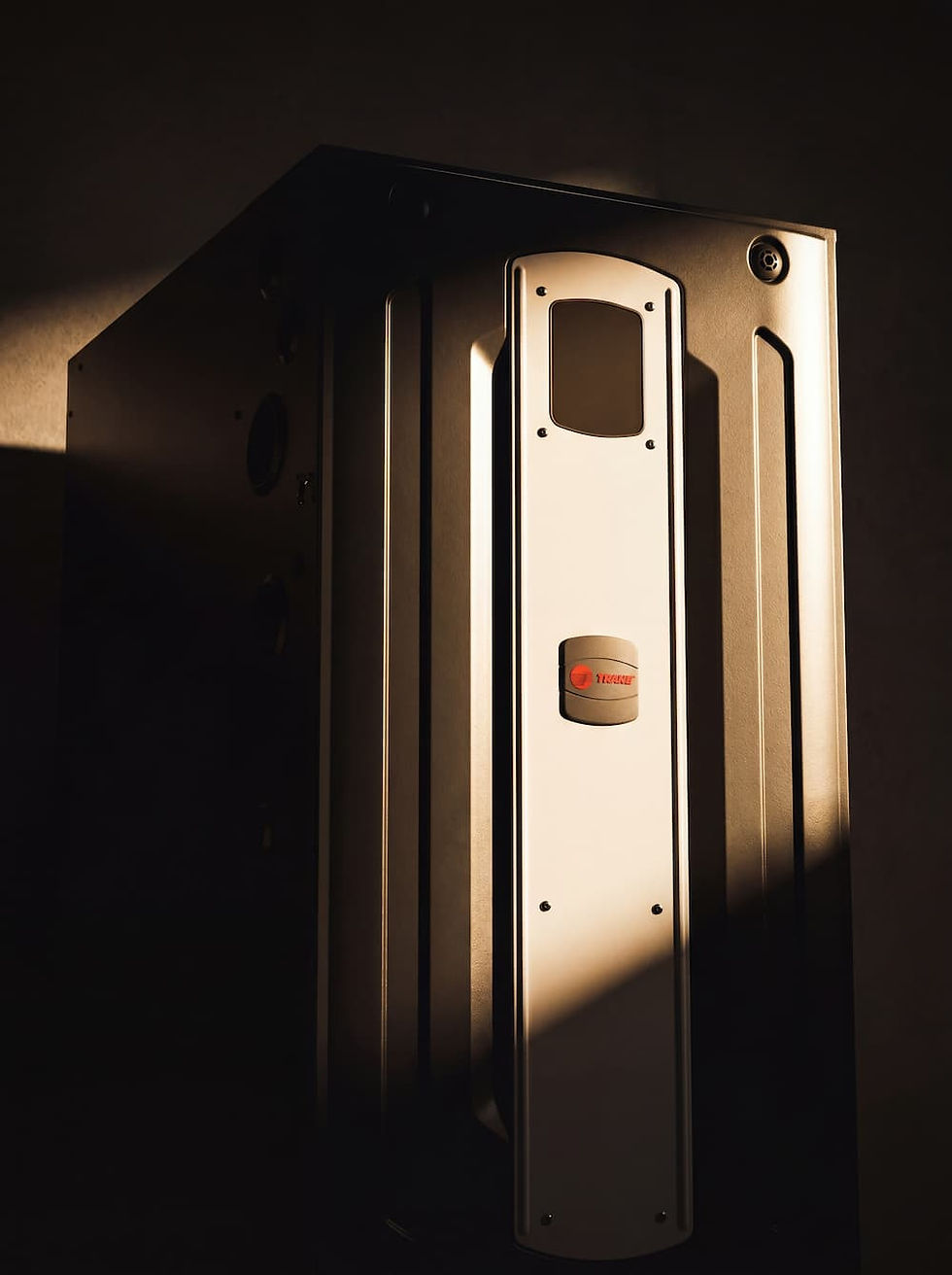
For reference, the Trane furnace lineup Ashley Heating Air and Water installs:- Trane XR95: 95% AFUE (single-stage)- Trane S9X2: up to 96% AFUE (two-stage)- Trane XC95m: up to 97.3% AFUE (modulating, variable-speed)
Why AFUE Isn't the Only Efficiency Metric
AFUE measures fuel conversion efficiency, but doesn't capture the efficiency of the blower motor that circulates your home's air — which runs every time the furnace does and consumes electricity. Furnaces with ECM (Electronically Commutated Motor) blowers, like the Trane S9X2 and XC95m, consume significantly less electricity than older PSC motor designs — often 50 to 75 percent less electricity for blower operation. This additional efficiency doesn't show up in AFUE but shows up in your electric bill.
When comparing furnaces, look at both AFUE and whether the system uses an ECM blower for a complete picture of operating efficiency.
Tax Credits for High-Efficiency Furnaces
Federal energy efficiency tax credits are available for qualifying high-efficiency furnace installations. Ask your Ashley Heating Air and Water comfort consultant about current credit eligibility for specific Trane models when you receive your estimate — this can meaningfully offset the cost difference between efficiency tiers.
Call Ashley at 208-378-9445 or visit ashleyheating.com to learn more about Trane furnace options for your Treasure Valley home.


Comments