
How Much Does a New Furnace Cost in Boise?

If your furnace is showing its age — or if it stopped working entirely — one of the first questions on your mind is: how much will a replacement cost? In the Treasure Valley, furnace replacement prices vary based on the efficiency tier, system size, and installation complexity. Here's an honest breakdown from Ashley Heating Air and Water, based on what we see daily serving Boise, Nampa, Meridian, Eagle, and Caldwell homeowners.
Why Furnace Replacement Costs Vary
Several factors determine where your project lands within a price range:
System tier: Single-stage, two-stage, and modulating furnaces have meaningfully different price points (see our Good/Better/Best guide).
System size: Furnaces are sized by BTU output to match your home's heating load. A 1,200-square-foot home needs a very different capacity than a 3,500-square-foot two-story — and larger capacity systems cost more.
Installation complexity: Standard replacements where the new furnace goes in the same location as the old one, using existing venting and gas connections, are the most straightforward. Situations requiring venting upgrades (switching from 80% to 95%+ AFUE changes venting requirements), gas line work, or electrical upgrades add to the total.
Accessories: Smart thermostats, whole-home humidifiers, and air cleaning systems can be added as part of a furnace installation project.
Typical Price Ranges for Boise-Area Homeowners
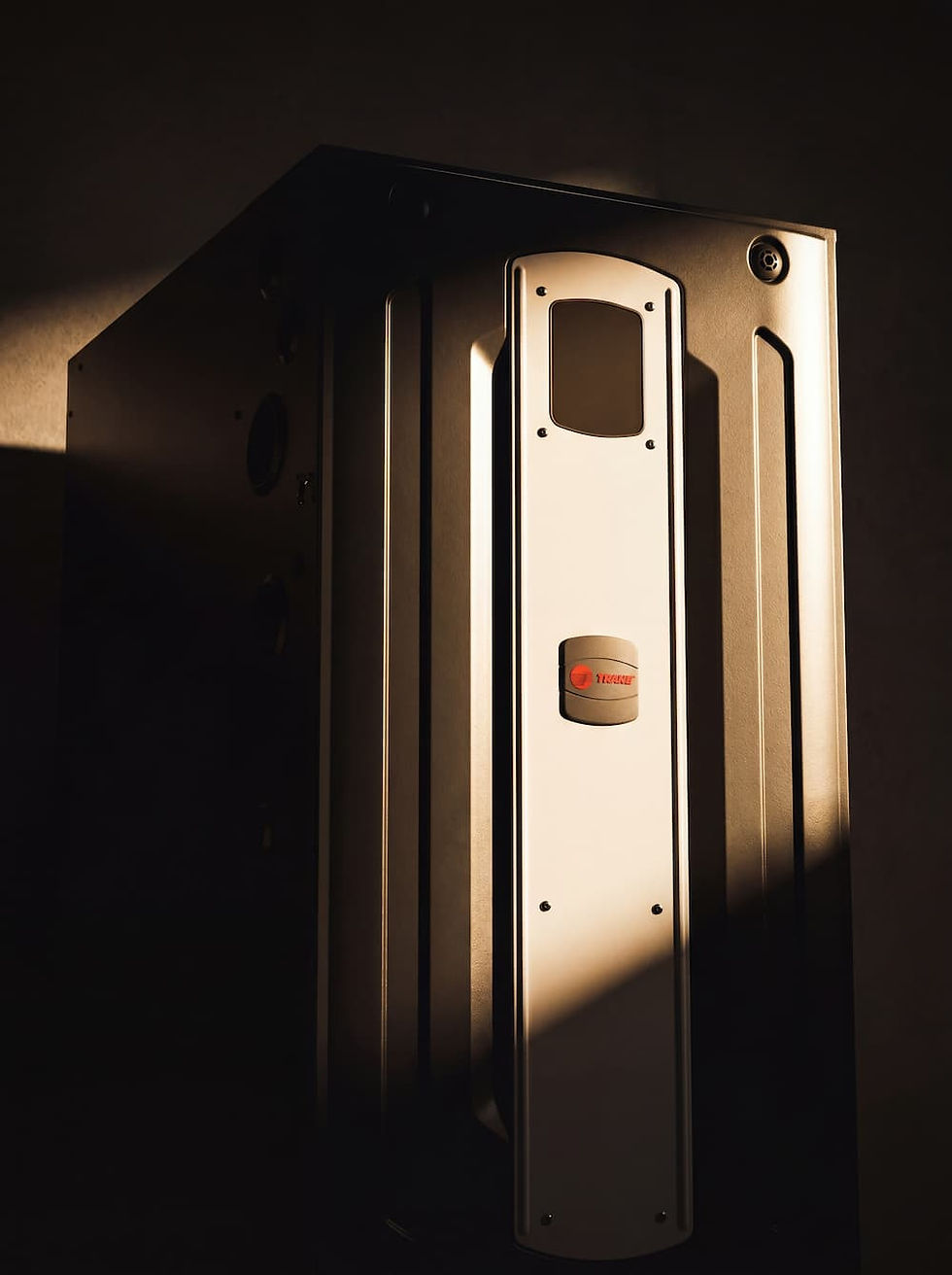
Entry level (single-stage, 95% AFUE): $4,000 to $7,500 installed. Trane XR95 or XT95. Reliable, efficient replacement for older systems.
Mid-range (two-stage, 96% AFUE): $5,500 to $9,000 installed. Trane S9X2 or S9V2. Two-stage comfort, ECM blower, near-premium efficiency.
Premium (modulating, 97%+ AFUE): $7,000 to $12,000 installed. Trane XC95m. Variable-speed blower, ComfortLink II communicating technology, maximum efficiency.
These ranges assume standard residential installation in existing utility space with compatible ductwork. Homes requiring significant ductwork modifications, high-altitude adjustments, or complex venting changes may fall above these ranges.
The Efficiency Math: What Does AFUE Actually Save?
If your current furnace is an 80% AFUE unit — which is common in homes built before 2005 in the Treasure Valley — upgrading to a 95%+ AFUE Trane changes the equation significantly. For every $100 you spend on natural gas with an 80% AFUE system, $20 goes up the flue as waste heat. A 95% AFUE system loses only $5 of every $100. For a home spending $1,200 per year on heating, that's roughly $180 annually in direct savings — and natural gas prices make this calculation worth doing before you decide on a system tier.
Tax Credits and Incentives
High-efficiency furnaces may qualify for federal energy efficiency tax credits under the Inflation Reduction Act, which provides credits for qualified furnace installations meeting specific efficiency thresholds. Idaho homeowners should also check with Intermountain Gas Company for any current rebate programs for high-efficiency equipment. Ask your Ashley technician about qualifying systems and current incentive availability when you receive your estimate.
Financing Options
Ashley Heating Air and Water offers flexible financing options through approved lenders, making it possible to access the system that's right for your home rather than defaulting to the least expensive option. Monthly payments on financing can often be offset by the energy savings from a higher-efficiency system, reducing the real out-of-pocket cost of the upgrade.
Call Ashley Heating Air and Water at 208-378-9445 or visit ashleyheating.com to schedule a free in-home estimate for furnace replacement in your Treasure Valley home.


Comments